" height="30.504795262550395px" id="O1zCVF3KW" transform="translate(0 4.745)" width="40.199071251249066px"/></svg>)

Architectural Treasures of Alamance County
Architectural Treasures of Alamance County
Architectural Treasures of Alamance County
David Smith
David Smith
Architectural Treasures of Alamance County documents the historic architecture of Alamance County, North Carolina through a collection of photographs, drawings, and archival material.

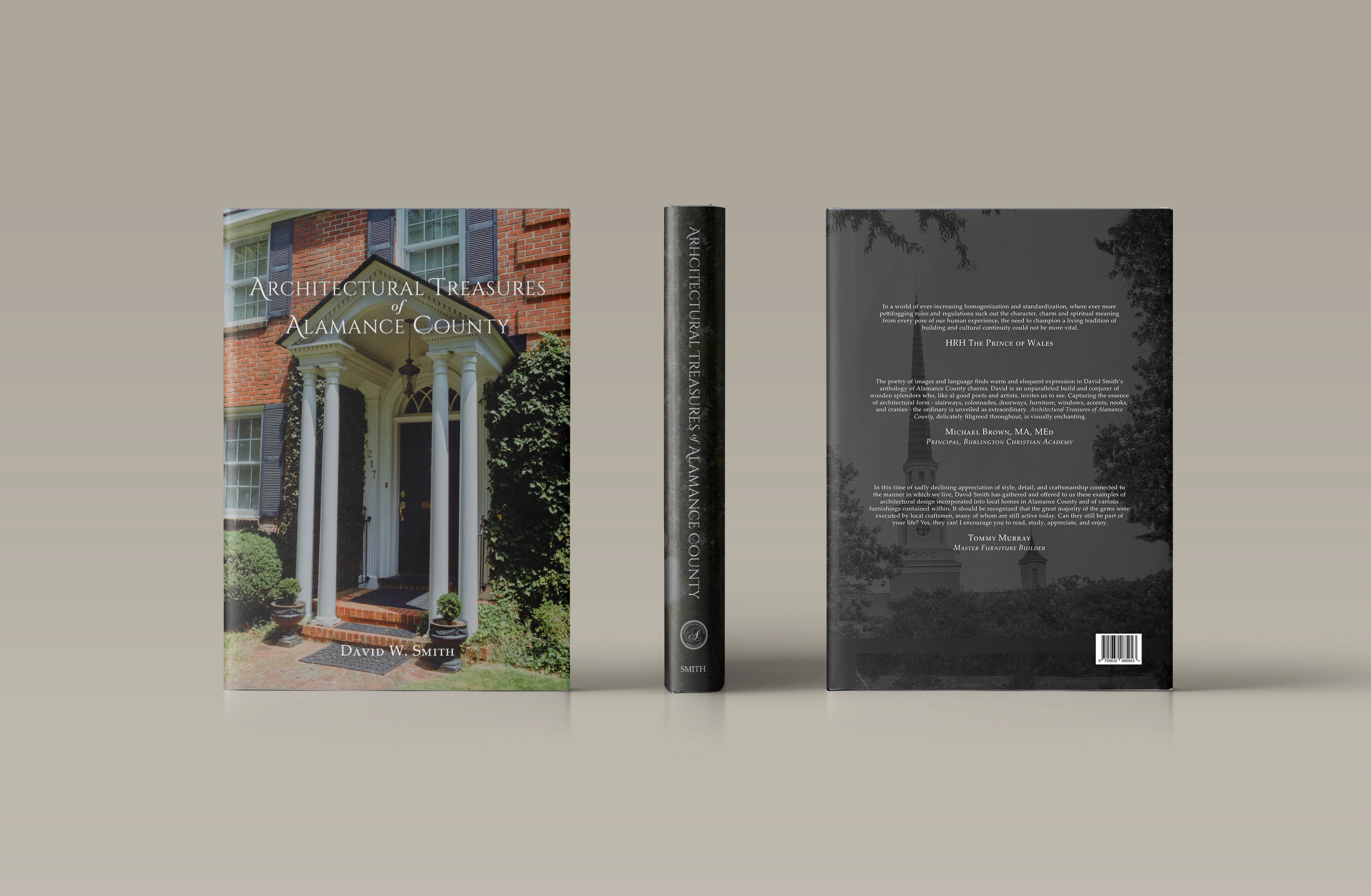
Lead designer overseeing the project from concept through print production, including:
◦ editorial direction
◦ cover design
◦ layout development
◦ image preparation
◦ color calibration
◦ printer coordination
241 × 279 mm
250 pages
300+ photographs
4 photographers
Perfect bound, case wrapped, dust jacket

The Challenge
The project began with a personal vision for documenting the architectural character of Alamance County, NC. I helped take that vision from an idea to a finished book, coordinating photographers and printers while handling the design, image preparation, and production from beginning to end.
Rather than focusing on buildings as complete structures, the book looks closely at architectural details, the materials, ornament, craftsmanship, and the smaller elements that give each place its character. Photography came from four different photographers, each with their own approach, making consistency across the book an important part of the design.
Production & Color
With photographs coming from multiple photographers, the images varied considerably in color, exposure, and quality. Some photographers supplied their own image preparation, while I handled the final adjustments and corrections needed to bring everything together as a consistent body of work.
The book was produced as a perfect-bound, case-wrapped volume with a dust jacket. I also designed a custom embossed detail for the case, drawing inspiration from the Alamance County logo.
Editorial Structure
The book deliberately avoids a rigid organizational system, allowing the collection of photographs to unfold more naturally. Within that loose framework, the design uses shifts in scale, image groupings, text, and occasional graphic elements to create movement and give the book a sense of progression.
The result is a restrained editorial system that lets the architecture remain the focus while giving the collection enough structure to feel considered and complete.
<<<WORK
" height="40px" id="AAwolzXGm" width="39px"/></svg>)